

In conservation, some of the most important heroes are not the ones in the spotlight. They are the quiet guardians who walk the land every day, reading tracks in the dust, noticing the smallest signs, and dedicating their lives to protecting wildlife.
One of those heroes is Sitoni, a rhino monitor who has spent the past two decades working at Manyoni, safeguarding one of Africa’s most endangered species: the black rhino.
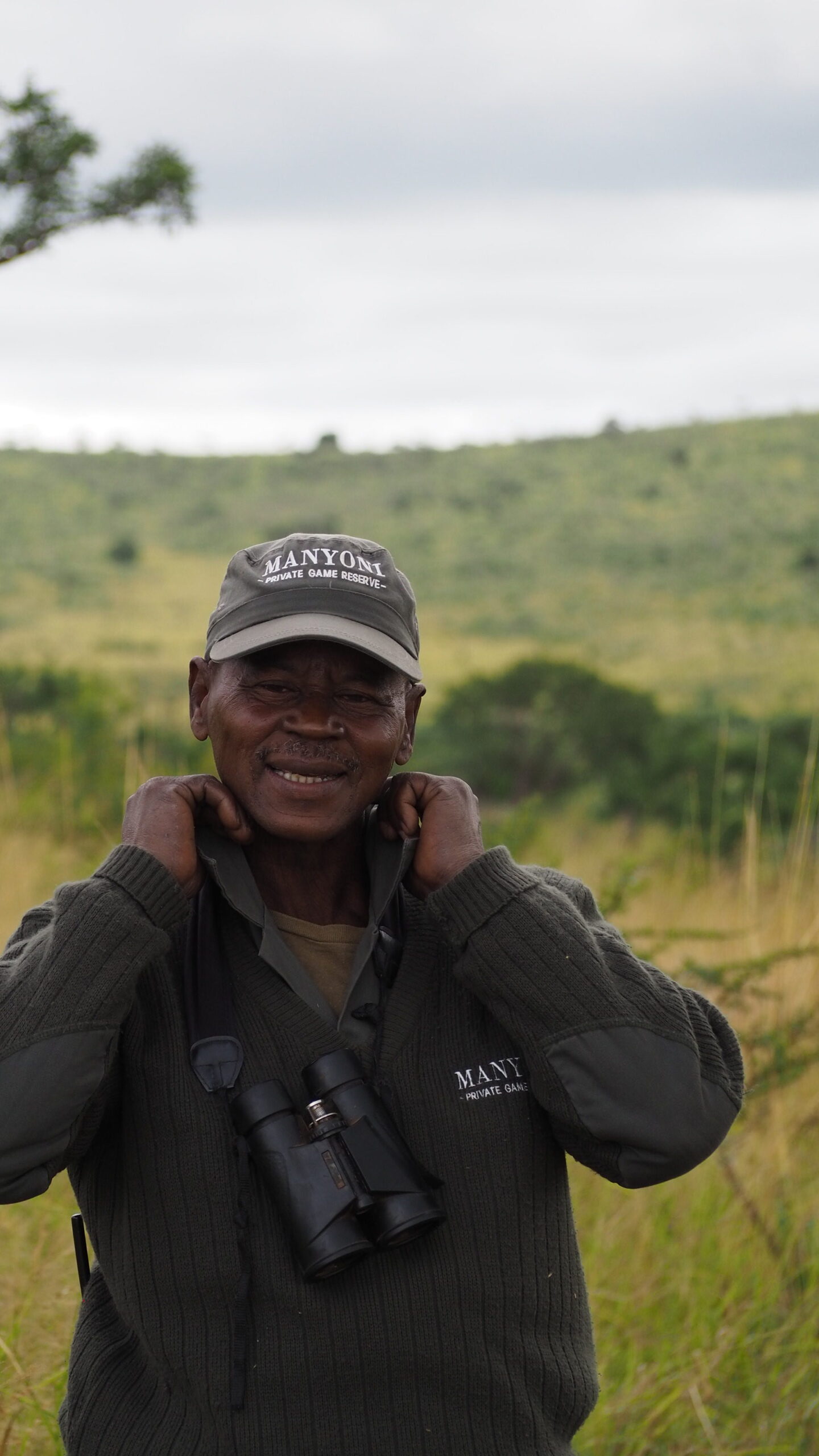
A Life Dedicated to the Bush
For more than 20 years, Sitoni has walked countless kilometres across rugged terrain, tracking rhinos through thick bush, open grasslands, and riverbeds. His work involves:
- Locating and monitoring individual black rhinos
- Observing behaviour and health
- Reporting movements to conservation teams
- Acting as an early warning system against threats
This work requires extraordinary patience, deep knowledge of the landscape, and an instinct that cannot be taught in a classroom.
Knowledge Beyond Formal Education
What makes Sitoni’s story especially powerful is that he has very little formal education and speaks only limited English. Yet his ability to read the bush, interpret tracks, and understand animal behaviour is remarkable.
His knowledge comes from:
- Years of hands-on experience
- A deep cultural connection to the land
- Learning directly from the environment itself
In many ways, Sitoni represents a truth often overlooked in conservation: expertise does not only come from textbooks — it also comes from lived experience.
The Importance of Uplifting Local Communities
Sitoni’s journey highlights why uplifting people from surrounding communities is essential to successful conservation.
When local community members are given opportunities:
- They gain meaningful employment
- They develop pride and ownership in protecting wildlife
- They become the strongest defenders of natural heritage
Investing in local people is not just social responsibility, it is one of the most effective conservation strategies in the world.
A Story That Inspires
Sitoni’s story reminds us that conservation is not only about animals, it is about people too.
It is about opportunity.
It is about dignity.
It is about recognising talent in all its forms.
Most of all, it shows that when local communities are empowered, conservation becomes stronger, more sustainable, and more meaningful.
Sitoni may describe himself simply as a rhino monitor.
But to those who know his work, he is something much more: A guardian, a teacher of the bush, and a living example of why people are at the heart of conservation.